
Electric vs Fuel Chafing Dish: Which One Is Better for Your Event?
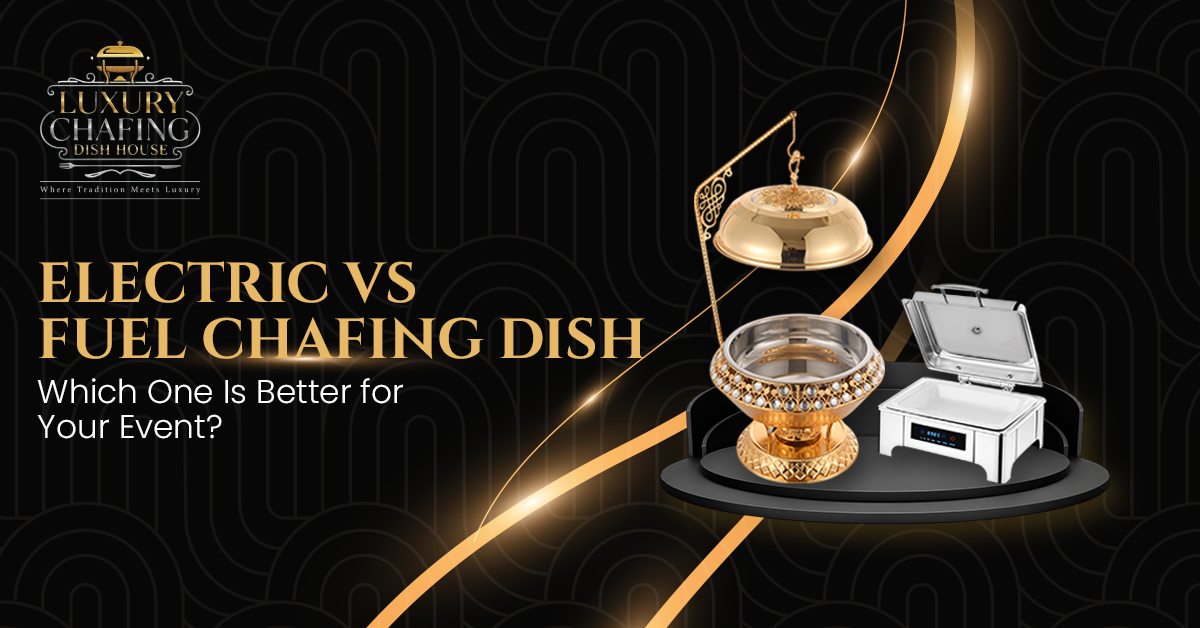
Keeping food hot at a buffet isn't just about function, it's the first thing guests notice when they walk up to the table. A dried out tray of chicken or a lukewarm sauce says as much about your event as the centerpieces do. So the question caterers, planners, and hosts ask constantly is simple: electric or fuel chafing dish which one actually performs better?
Short answer: electric wins indoors, fuel wins outdoors. The longer answer depends on your venue, your power access, how long service runs, and how much heat control your menu needs. Let's break it down with actual numbers, not just generalities.
What a Chafing Dish Actually Does?
A chafing dish holds already cooked food at a safe serving temperature it doesn't cook. A water pan sits between the heat source and the food pan, so the food is warmed by gentle steam rather than direct heat, which is why a good chafer can hold a cream sauce for three hours without breaking it.
The FDA sets the bar here: hot food needs to stay at 140°F or above during service, and it specifically names chafing dishes as acceptable hotholding equipment. That's the number every setup electric or fuel needs to hit, regardless of heat source.
Electric Chafing Dishes: The Indoor Standard
Electric chafers plug into a standard outlet and heat the water pan (or food pan directly) with a builtin element instead of an open flame. Most commercial grade models including the rolltop and brassfinish electric chafers in our Electric Chafing Dish collection include adjustable dial settings, typically ranging from roughly 175 to 500 watts depending on pan size and model. A full size unit at the higher end of that range will hold a water pan at a rolling simmer indefinitely, as long as it stays plugged in.
Where electric wins:
-
Heat consistency. A dial gives you a fixed, repeatable temperature for the full length of service no guessing based on how much fuel is left.
-
No open flame. Most hotel ballrooms, corporate venues, and banquet halls with strict fire codes require this.
-
Lower cost per event over time. No recurring fuel can be purchased; the unit pays for itself after a handful of uses (see the cost breakdown below).
-
Cleaner presentation. No fuel canister, no visible flame just a polished buffet line, which matters more the more elevated the event.
-
Unlimited hold time. As long as it's plugged in, it runs. No midevent fuel swap.
Where it falls short:
you need an outlet within cord range, and cord management becomes a real consideration in a crowded buffet line. Extension cords across walkways are a trip hazard many venues won't allow without cord covers.
Best for: hotel breakfast buffets, restaurant service, banquet halls, corporate catering, indoor weddings, any event running longer than 2-3 hours.
Fuel Chafing Dishes: The Portable Standard
Fuel chafers use a canned gel or wick fuel (Sternostyle) placed beneath the water pan. No outlet, no cord, you set it down, light it, and it works.
Burn time depends on the can size. Standard 2.5 hour cans are common for shorter receptions or cocktail hours, while 6 hour cans are the standard choice for a full evening reception or an extended buffet line. A typical wedding reception buffet running 3-4 hours will usually need one 6hour can per chafer, or two 2.5hour cans swapped midservice if you're using the smaller size. Budget roughly one can per chafing dish per 2-6 hours of service, and always keeping a spare can on hand running out midservice is the single most common fuelchafer mistake caterers make.
Where fuel wins:
-
Total portability. Gardens, tents, barns, food trucks, offsite venues anywhere without reliable power.
-
Lower upfront cost. A classic stainless or copper chafing dish set with fuel holders is typically the cheaper entry point.
-
Fast setup. No electrical planning required; place, light, serve.
-
Works anywhere, instantly. No dependency on a venue's electrical capacity or outlet placement.
Where it falls short:
heat is less consistent, flame size, water level, and wind (for outdoor events) all affect temperature and it carries an ongoing per event fuel cost, plus an open flame near linens and decor, which some venues won't allow.
Best for: outdoor weddings, backyard parties, offsite catering, tented events, food festivals, onetime or occasional use.
Side by Side Comparison
|
Factor |
Electric |
Fuel |
|
Heat source |
Electric element (~175-500W) |
Gel/wick fuel can (2.5-6 hr per can) |
|
Temperature control |
Adjustable, consistent |
Varies with fuel & wind |
|
Power required |
Yes |
No |
|
Open flame |
No |
Yes |
|
Portability |
Limited to outlet range |
Fully portable |
|
Upfront cost |
Higher |
Lower |
|
Cost over repeated use |
Lower (no fuel refills) |
Higher (fuel per event) |
|
Best venue type |
Indoor, powerequipped |
Outdoor, offsite, no power |
|
Typical hold time |
Unlimited while plugged in |
2-6 hrs per can |
What Does Each One Actually Cost Over Time?
This is where the decision often gets made in practice, so it's worth doing the real math instead of just saying "fuel is cheaper upfront."
A basic ful lsize fuel chafer set typically runs less upfront than an electric equivalent, but each event adds fuel cost on top, generally a few dollars per can, and most full size chafers need one to two cans per event depending on service length. Run the same chafer for 10 events and that recurring fuel cost stacks up fast, often adding up to more than the price difference between the fuel unit and an electric one.
An electric chafer costs more to buy once, but after that initial purchase, the only recurring cost is electricity which is negligible. For anyone using a chafer more than a handful of times a year restaurants, hotels, recurring caterers the electric unit typically breaks even against fuel costs within the first several bookings, then keeps saving money on every event after that.
The practical rule: if you're hosting one event, fuel is cheaper. If you're running a business that buffets weekly, electricity saves money by the end of the first season.
What About a Covered Patio or SemiOutdoor Venue?
Not every event is cleanly indoor or outdoor, and this is the scenario that trips people up. A covered patio, an openair pavilion, or a tented reception with power run to the tent all sit in a gray zone.
The deciding factor isn't really "indoor vs outdoor" it's power access and wind exposure. If there's a reliable outlet within cord range and the space is sheltered from wind, electric is still the better call; you get the consistent heat without sacrificing portability, since you're not moving the unit far. If the space is exposed to wind or there's no power run to that part of the venue, fuel is the safer, more practical choice, even if the space is technically covered.
A quick gutcheck: if a waiter could plug in a phone charger where the buffet table will sit, electric works. If not, go for fuel.
Quick Decision Guide
-
Indoor wedding, hotel, or corporate event with an outlet nearby? → Electric
-
Garden wedding, backyard party, or offsite catering job? → Fuel
-
Covered patio or tent with power run to it and no wind exposure? → Electric
-
Serving delicate sauces, eggs, or rice that scorch easily? → Electric, for the finer temperature control
-
One time party where you don't want to invest in a plugin unit? → Fuel
-
Running a catering business with repeat bookings? → Both. Most professional caterers stock electric units for indoor jobs and fuel units for anything mobile.
Food Safety Basics (Either Way)
Whichever heat source you choose, the rules don't change:
-
Preheat food fully before it goes into the chafer it's a holder, not a cooker
-
Keep food at 140°F or above, checked with a thermometer, not by eye
-
Swap in fresh pans rather than topping off old ones
-
Keep the water pan filled so it doesn't run dry
-
Follow the FDA's 2hour rule (1 hour if the room is above 90°F) for food left out at unsafe temperatures
-
For fuel chafers, keep a spare can on hand don't let heat lapse midservice while swapping fuel
The Bottom Line
If your venue has power and your event runs long, an electric chafing dish gives you the steadiest heat and the cleanest look the reason it's the default in hotels and banquet halls. If you're setting up outdoors or somewhere without an outlet, a fuel chafing dish gives you the freedom to serve anywhere, no cord required.
Most serious caterers eventually own both, using electricity for anything with power access and fuel for anything mobile. Browse our Electric Chafing Dish collection for indoor service, or our RollTop and Copper Chafing Dish sets built for portable, statement piece buffet setups.
FAQs
Is electricity or fuel better for events?
Electric is better indoors with power access; fuel is better outdoors or where power isn't available.
Can chafing fuel be used indoors?
Only if the venue permits open flames always confirm fire code rules first.
Do electric chafing dishes need water?
Most still use a water pan for gentle steam heat; some waterless models exist, so check the product spec.
How long does a fuel can last?
Standard cans run either about 2.5 hours or 6 hours, depending on size. Budget one hour can per chafer for a typical 3-4 hour event.
How long does food stay warm in a chafing dish?
As long as it's held at 140°F or above and checked periodically not at a fixed time, but a temperature target.
Which is cheaper, electric or fuel?
Fuel is cheaper for a single event; electric is cheaper over repeated use since it has no recurring fuel cost.
