
How to Clean and Polish Stainless Steel Chafing Dishes
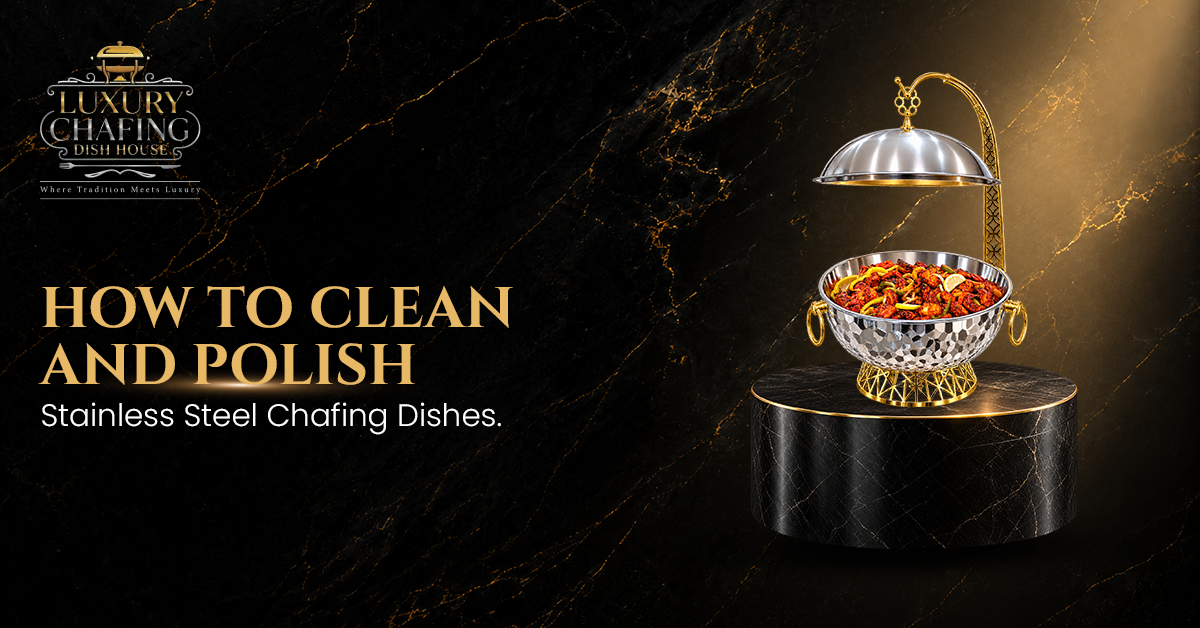
There is a quiet moment every caterer knows well. The buffet has closed, the last guest has drifted toward the dessert table, and the chafing dishes that carried the meal now sit dulled by steam, fingerprints, and dried gravy along the rim. What looked like a mirror at the start of service has clouded over. The difference between a set that lasts one season and one that stays showroom bright for years comes down to how you treat it in that moment, and in the ten minutes after.
Learning how to clean a chafing dish properly is not a chore tucked at the end of an event. It is part of the presentation itself. A polished chafer signals care to every person who walks past it, and it protects an investment that hotels, banquet halls, and wedding planners rely on week after week. This guide walks you through the full routine, from the everyday wipe-down to deep restoration of tarnished stainless steel, with the same standards we hold across the Luxury Chafing Dish House collection.
Why a Clean Chafer Matters More Than You Think
Stainless steel earns its reputation because of an invisible ally: a thin, self healing layer of chromium oxide called the passive layer. When chromium in the alloy meets oxygen, it forms this film that shields the metal beneath from rust and corrosion. Scratch it, and it repairs itself as long as oxygen is present. Attack it with the wrong cleaner, though, and you strip away the very thing keeping your buffet equipment bright.
That is the practical heart of chafer maintenance. Every mistake you avoid, harsh chemicals, steel wool, standing water, protects that passive layer. Every good habit you build, drying with the grain, rinsing thoroughly, polishing gently, extends the working life of the piece. For a busy catering operation, that translates directly into fewer replacements, lower costs, and food warmers that keep looking the part at the next wedding, gala, or hotel breakfast service.
There is a hygiene dimension too. Pitted or filmed surfaces trap bacteria and become harder to sanitize. A smooth, clean chafing dish is easier to keep food-safe, which matters when you are holding hot food at 135°F (57°C) or above per FDA Food Code guidance. Presentation and safety travel together.
What You Will Need Before You Start
Good results come from the right kit, and almost all of it is gentle by design. Reach for these before you reach for anything abrasive.
Tool or Supply |
Purpose |
Notes |
|
Microfiber cloths |
Cleaning, drying, and buffing |
Keep separate cloths for washing and polishing |
|
Mild dish soap |
Daily grease and residue removal |
Non-chlorine formulas only |
|
Baking soda |
Gentle paste for burnt-on food and light stains |
Mix with water to a thick consistency |
|
Distilled white vinegar |
Water spots and mineral deposits |
Never leave to soak for long periods |
|
Non-abrasive sponge |
Scrubbing without scratching |
Avoid the green scouring side |
|
Commercial stainless steel polish |
Restoring shine and adding protection |
Oil-based or water-based, food-area safe |
|
Descaling solution |
Hard-water scale in the water pan |
For heavier mineral buildup |
Notice what is missing: steel wool, chlorine bleach, ammonia-based sprays, and abrasive pads. Each of these can scratch the finish or damage the protective chromium layer, leaving you with pitting and discoloration that no amount of polishing will hide.
The Step by Step Cleaning Routine
A chafing dish is a system of parts, and each one deserves attention. Break it down and the job becomes simple.
1. Disassemble while the food is fresh in memory.
As soon as service ends, separate the food pan, water pan, lid, frame, and fuel holder. The longer food residue sits, the more it dries, hardens, and marks the surface.
2. Wash the food pan and water pan.
Use hot, soapy water and a soft sponge or cloth. Scrub the food pan first, then the water pan, checking the water pan for mineral deposits from hard water. Work gently and consistently rather than aggressively.
3. Clean the lid, frame, and fuel holder.
Wipe the lid with attention to hinges and edges where residue collects. Wipe down the frame with a damp cloth and mild detergent, paying attention to joints and crevices. Empty and wipe the fuel holder, then let it dry completely.
4. Always work with the grain.
Stainless steel has a directional finish, often called the polish lines or grain. Scrub and wipe in the same direction as those lines, never across them. This single habit prevents fine scratches and keeps the finish even.
5. Rinse thoroughly.
Detergent film left behind dulls the surface over time and causes streaking. Rinse with clean water until no soap remains.
6. Dry immediately and completely.
This is the step most people skip, and it is the one that matters most. Air drying leaves mineral spots, especially in hard-water regions. Dry every surface with a clean microfiber cloth so no water stands on the steel. No standing water means no water spots and no hard-water deposits.
Tackling Stubborn Stains and Water Spots
Even with a solid routine, chafers pick up marks. Match the problem to the fix.
Problem |
Recommended Fix |
Method |
|
Burnt-on food |
Baking soda paste |
Apply, let sit a few minutes, scrub gently with a soft sponge, rinse |
|
Water spots |
Distilled white vinegar |
Wipe affected areas after drying, then rinse and dry again |
|
Hard-water scale (water pan) |
Vinegar-water solution or descaler |
Soak or wipe, then rinse thoroughly |
|
Grease film |
Mild soapy water |
Circular then with-grain motion, rinse, dry |
|
Light discoloration from heat |
Baking soda paste or stainless cleaner |
Wipe on, buff off, follow with polish |
For heavier residue in a pan, an overnight soak in hot water and baking soda usually loosens it. A short simmer of water and vinegar in the pan can lift particularly stubborn deposits before you scrape them away with a soft tool. Remember the distinction between products: standard distilled white vinegar is milder than "cleaning vinegar," which runs roughly twenty percent stronger in acidity. Use the gentler option and never let concentrated acid sit on the steel.
How to Polish Stainless Steel to a Mirror Finish
Cleaning removes what does not belong. Polishing restores what made you buy the piece. Once your chafer is clean and fully dry, this is where the shine returns.
Apply a small amount of commercial stainless steel polish to a fresh microfiber cloth. Work it into the surface in the direction of the grain, covering the piece evenly. Let it sit for the time the manufacturer recommends, then buff off the excess with a clean, dry microfiber cloth until the surface gleams without streaks.
For a natural alternative, a few drops of olive oil or baby oil on a cloth can bring up a soft luster, worked in with the grain and then wiped fully dry so no greasy residue remains. A word of caution: oils are flammable, so keep oil-polished surfaces well away from open chafing fuel and heat sources, and buff off every trace before the piece goes back into service. A dedicated stainless polish is the safer choice around live flame.
The payoff is worth the few minutes. A freshly polished roll-top chafer or luxury food warmer becomes the focal point of the table, catching light and reflecting the elegance of the setting around it.
The Material Behind the Shine
Not every chafing dish polishes up the same way, and the reason is the grade of steel underneath. Understanding this helps you buy smarter and clean with realistic expectations.
Feature |
304 (18/8 or 18/10) |
201 |
|
Chromium |
18 to 20 percent |
16 to 18 percent |
|
Nickel |
8 to 10.5 percent |
3.5 to 5.5 percent |
|
Corrosion resistance |
Excellent |
Moderate |
|
Best use |
Daily commercial buffet service |
Occasional or decorative use |
|
Typical lifespan |
Longest under heavy use |
Shorter under frequent washing |
Grade 304, widely marketed as 18/8 or 18/10 stainless steel, is the internationally recognized benchmark for commercial food-contact equipment. Its higher chromium and nickel content build a stronger passive layer, which means it resists the water spots, pitting, and discoloration that appear faster on lower-grade 201 steel under repeated washing and acidic-food contact. If you run daily hotel buffet service or a high-volume catering operation, 304 rewards you with equipment that stays brighter longer and takes a polish more readily. This is exactly why quality matters when selecting buffet equipment in the first place.
Habits That Keep Your Chafers Beautiful for Years
The best maintenance is quiet and consistent. Clean after every use rather than letting residue accumulate. Store pieces fully dry in a cool, ventilated space, never damp and never stacked wet, which invites corrosion. Inspect lids, handles, and hinges periodically so a loose fitting gets addressed before it becomes a failure. In hotel and catering settings, a weekly deep clean layered on top of daily care keeps an entire inventory looking uniformly professional.
Treat your serving equipment with this rhythm and a good chafing dish will reward you across countless events, from intimate dinners to grand banquet halls, holding its shine like the day it arrived.
Frequently Asked Questions
How do I clean a chafing dish after every use?
Disassemble the pieces, wash the food pan, water pan, and lid in hot soapy water with a soft cloth, rinse thoroughly, and dry immediately with a microfiber cloth to prevent water spots. Wipe the frame and fuel holder, and let everything dry fully before storing.
Can I put my chafing dish in the dishwasher?
Handwashing is safer even for pieces labeled dishwasher-safe. High heat and detergents, especially chloride-based ones, can dull the finish over time. If you value the shine, wash by hand.
How do I remove water spots and hard-water stains?
Wipe the affected area with distilled white vinegar after the piece is dry, then rinse and dry again. For scale in the water pan, use a vinegar-water solution or a proper descaling product, followed by a thorough rinse.
What should I never use on stainless steel chafing dishes?
Avoid steel wool, abrasive pads, chlorine bleach, and ammonia-based cleaners. These scratch the surface or damage the protective chromium layer, leading to pitting, rust, and permanent discoloration.
How often should I polish my chafing dishes?
Polish whenever the finish looks dull or before an event where the chafer is on display. For daily commercial use, a light polish weekly keeps buffet equipment looking crisp; for occasional home use, polishing every few uses is plenty.
Why does my chafing dish look dull even after cleaning?
Usually it is detergent film, hard-water mineral spots, or a compromised passive layer from harsh cleaners. Rinse and dry more thoroughly, treat spots with vinegar, then restore shine with a stainless steel polish worked in with the grain.
Bring Your Buffet to Life
A well-kept chafer is the difference between a table that looks assembled and one that looks curated. If your current set has seen better days, or you are building an inventory that deserves to shine, explore the Luxury Chafing Dish collection or browse elegant roll-top buffet chafing dishes crafted for real presentation. Pair them with serving spoons and holders to complete the look. Not sure which pieces suit your venue and guest counts? Contact our team and we will help you choose serving equipment worth polishing for years to come.
Explore more useful blog posts:
What Is a Chafing Dish? Uses, Types, Parts, and How It Works
