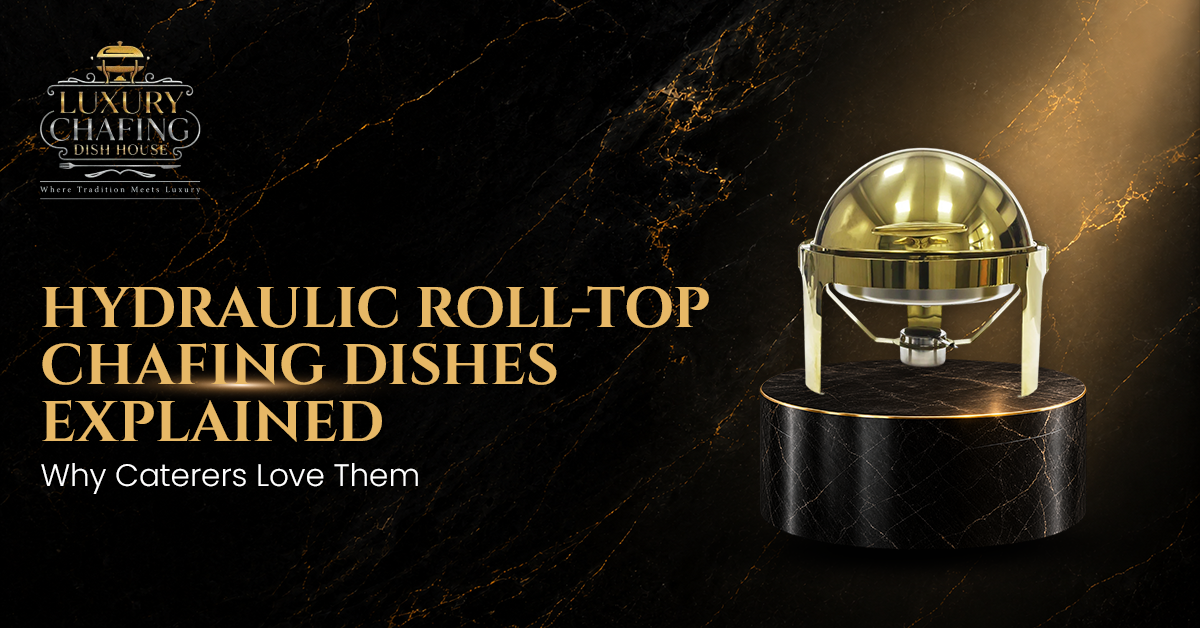
Hydraulic Roll-Top Chafing Dishes Explained: Why Caterers Love Them
Watch a banquet server work a crowded buffet line and you will notice the small frictions nobody talks about. A lid lifted with one hand while a serving spoon balances in the other. A stack of removable covers taking up half the table because there is nowhere to put them. And that sound, the metallic clang of a lid dropping onto a rim, cutting through the string quartet at exactly the wrong moment.
Then watch the same service run on a hydraulic roll top chafing dish. The lid glides back into the body of the chafer, pauses wherever the server leaves it, and settles closed without a whisper. Nothing gets set down. Nothing slams. The line moves faster and the room stays calm.
That is the short version of why caterers have quietly moved toward hydraulic models over the past few years. The longer version is worth understanding before you invest in a set, because the term gets used loosely and not every roll top chafer works the same way.
What Exactly Is a Hydraulic Roll-Top Chafing Dish?
Start with the roll top itself. A roll top chafer has a lid that rolls back along a curved track into the chafer body rather than lifting off completely. The cover never leaves the unit, which means it never needs a resting place on your buffet table and never picks up contamination from a side surface.
The hydraulic element is what happens inside that motion. A hydraulic chafing dish uses a built-in damping system, essentially a small gas spring or hydraulic damper, that controls the speed of the lid as it travels. Instead of swinging freely under its own weight, the cover decelerates automatically and settles into place silently. Lift it and it holds position. Release it and it drifts closed rather than dropping.
The industry sometimes calls this a soft-close or slow-down opening system, and it is borrowed from the same engineering used in premium cabinetry and automotive tailgates. Applied to buffet equipment, it turns a lid into a controlled instrument rather than a hinged weight.
Most quality units offer two positions worth knowing about: a 90-degree half opening for controlled portioning during service, and a full 180-degree opening for loading, refilling, and cleaning. Being able to choose between them is a genuine operational advantage during a busy dinner rush.
Roll Top vs Hydraulic Roll Top vs Traditional Chafer
The three formats look similar in a catalog photo and behave very differently in a ballroom. Here is the honest comparison.
Feature |
Traditional Lift-Off Chafer |
Standard Roll Top Chafer |
Hydraulic Roll Top Chafer |
|
Lid handling |
Removed entirely, needs table space |
Rolls back into body |
Rolls back into body |
|
Closing action |
Manual, prone to slamming |
Manual, can drop under weight |
Damped, silent, self-slowing |
|
One-handed service |
Difficult |
Possible |
Effortless |
|
Noise level |
High |
Moderate |
Very low |
|
Heat loss per opening |
Highest |
Reduced |
Lowest with partial-open control |
|
Hinge and seal wear |
Moderate |
Higher over time |
Lowest, damper absorbs force |
|
Burn and pinch risk |
Elevated |
Moderate |
Minimal |
|
Best suited to |
Occasional home use |
Mid-tier catering |
Hotels, weddings, premium catering |
The pattern is clear. Each step up removes a point of friction from live service. For a home host running one dinner party a year, a traditional chafer is fine. For a catering company setting and striking equipment forty weekends a year, the hydraulic mechanism pays for itself in equipment longevity alone.
Why Caterers Actually Love Them
Ask working caterers rather than manufacturers and the same reasons come up repeatedly.
Service speed under pressure.
During peak buffet traffic, a server frequently has a serving utensil in one hand and a replacement pan or a guest question competing for the other. A lid that stays exactly where you leave it removes an entire step from every interaction. Across a two-hour service with hundreds of covers, those seconds compound.
Silence as a design feature.
Nobody plans a wedding around lid noise, but everyone notices it. Slamming covers puncture the atmosphere of a formal reception. The damping system eliminates that entirely, which is why hydraulic units have become common in upscale hotel breakfast service and banquet halls where ambience is part of the product.
Staff safety.
Traditional lids create two hazards: pinched fingers as covers drop, and steam burns as servers reach across an open chafer to retrieve a cover set down behind it. A controlled-descent lid effectively removes both. Anti-pinch and anti-scald behavior is one of the most cited operational benefits of the hydraulic design.
Better hot-holding performance.
Every time a lid opens fully, the chafer vents heat. Partial-open positioning lets staff access food without exposing the entire surface area of the pan. Combined with a tempered glass window in the lid, which lets guests and staff see the contents without opening anything at all, you get measurably better temperature stability across a long service. That matters when the FDA Food Code requires hot-held food to stay at 135°F (57°C) or above. We cover this in depth in our guide on keeping a buffet hot and safe like a pro.
Equipment lifespan.
This is the argument that closes the sale for most operators. A damper absorbs the force that would otherwise transfer into hinges, seals, and lid rims every single time the chafer closes. Over hundreds of events, the reduction in mechanical stress is the difference between replacing a set every few seasons and keeping one looking presentable for years.
Understanding the Anatomy
A well-built hydraulic roll top chafer is a system, not a bowl with a lid. Knowing the parts helps you evaluate what you are buying, and if you want the fundamentals first, start with what a chafing dish is and how it works.
The unit is built around a water pan that holds the heat-transferring water bath, making the whole thing an indirect bain-marie rather than a direct-heat cooker. Inside that sits the food insert pan, often a gastronorm or GN-compatible pan, which holds the actual dish. Underneath, the frame carries fuel holders for chafing fuel or accepts an electric heating plate. Above it all sits the roll-top lid with its hydraulic damper and, frequently, a tempered glass viewing window.
Worth knowing: the water bath is not only for heat. Fill it with ice instead and the same chafer holds cold items like seafood displays or chilled desserts.
If you are still deciding how to power your units, our guide on electric vs fuel chafing dishes breaks down the trade-offs for different venue types.
Choosing the Right Format for Your Venue
Shape and capacity should follow your menu and your floor plan, not the other way around.
Format |
Typical Capacity |
Best For |
|
Round |
6L to 8L |
Soups, curries, rice, biryani, stews, centerpiece placement |
|
Square |
6L to 8L |
Compact buffet lines, side dishes, modern layouts |
|
Rectangle |
8L to 9L+ |
High-volume mains, carved meats, pasta, banquet service |
At Luxury Chafing Dish House, the roll top chafing dish buffet collection covers all three geometries. The Round Big Luxury Hydraulic Chafing Dish at $160 suits centerpiece service and soup courses. The Square Luxury Hydraulic Chafing Dish, also $160, fits tighter buffet lines where every inch of table counts. For high-volume mains, the Rectangle Luxury Hydraulic Chafing Dish at $175 gives you the surface area a banquet demands.
A practical planning note: as a rule of thumb, one full-size chafer serves roughly 40 to 50 guests per dish on a multi-item buffet. Build your count from your menu, then add one spare unit for the item that always runs out first. For a fuller walkthrough of matching equipment to guest counts, see our guide on choosing the best chafing dishes for buffet service, and if you are planning a reception, our wedding buffet setup ideas covers the presentation side.
Material Quality Is Not Optional Here
A hydraulic mechanism is only as good as the body it is mounted in. Look for 304 stainless steel, marketed as 18/8 or 18/10, which contains roughly 18 percent chromium and 8 to 10 percent nickel. That composition builds a robust passive chromium oxide layer, the self-healing film that resists rust, pitting, and the dulling that comes from repeated washing and acidic food contact.
Lower-grade 201 steel substitutes manganese for much of the nickel. It costs less and looks nearly identical on day one, but under daily commercial washing and chloride-based detergents it degrades visibly faster, particularly around welded joints and pan rims. For a chafer that is a display piece as much as a serving vessel, that difference shows.
The same logic applies to the mirror-polished finish. High-quality polishing does not just look better, it reduces oil adhesion and makes the surface easier to restore between events.
Making Them Last
Hydraulic chafers reward the same care as any premium stainless equipment, with one addition: mind the mechanism.
Clean the food pan, water pan, and lid after every service with mild soap and a soft cloth, working with the grain of the steel. Rinse thoroughly and dry immediately with a microfiber cloth, since standing water leaves mineral spots. Avoid steel wool, abrasive pads, and chlorine bleach, all of which attack the protective chromium layer.
For the hydraulic assembly specifically, keep the track and hinge area free of grease and food debris, and never force the lid faster than the damper allows. The damping system is engineered to control the motion; overriding it repeatedly is the fastest way to wear it out. A periodic check of the lid action will tell you immediately if anything needs attention.
Frequently Asked Questions
What is a hydraulic chafing dish?
It is a chafing dish with a lid that rolls back into the chafer body and uses a built-in hydraulic damper to control its speed. The lid opens smoothly, holds any position, and closes slowly and silently instead of dropping or slamming.
What is the difference between a roll top chafer and a hydraulic roll top chafer?
Both have lids that roll back rather than lift off. Only the hydraulic version adds a damping mechanism that regulates the speed of the motion, giving you soft-close operation, position holding, and far less wear on the hinges.
Are hydraulic roll top chafing dishes worth the extra cost?
For anyone catering regularly, yes. The added cost buys faster one-handed service, quieter operation, lower burn and pinch risk, better heat retention, and significantly longer equipment life. For very occasional home use, a standard roll top may be sufficient.
Can a hydraulic chafing dish be used with electric heating instead of fuel?
Yes. Most units accept either canned chafing fuel in the frame's fuel holders or an electric heating plate, which is useful for venues that restrict open flame. Luxury Chafing Dish House stocks an electric heating plate base as a separate component.
Can these chafers hold cold food?
They can. Fill the water pan with ice instead of hot water and the same unit works for chilled seafood, salads, or desserts.
How many chafing dishes do I need for my event?
Plan on roughly one full-size chafer per 40 to 50 guests for each menu item on a multi-dish buffet, then add a spare for your most popular dish.
Do hydraulic lids require special maintenance?
Not special, just sensible. Keep the hinge and track clean and free of grease, avoid forcing the lid against the damper, and follow standard stainless steel care: mild soap, no abrasives, thorough drying.
Upgrade the Way Your Buffet Runs
The right equipment disappears into the service. Guests notice the food, the room, and the ease of it all, not the mechanism making it possible. That is exactly what a good hydraulic roll top chafer does.
Browse the full roll top chafing dish buffet collection to compare round, square, and rectangular hydraulic models, or explore the wider luxury chafing dish range if you are building a complete buffet setup. Pair your chafers with serving spoons and holders to finish the line properly. Not sure how many units your venue needs? Contact our team and we will help you spec a set that fits your guest counts, your menu, and your room.
